Mujin Hanbai (無人販売) - Unattended Sales
The Japanese Self-Service System That Goes Beyond Machines
LIFE IN JAPAN
1/19/20263 min read
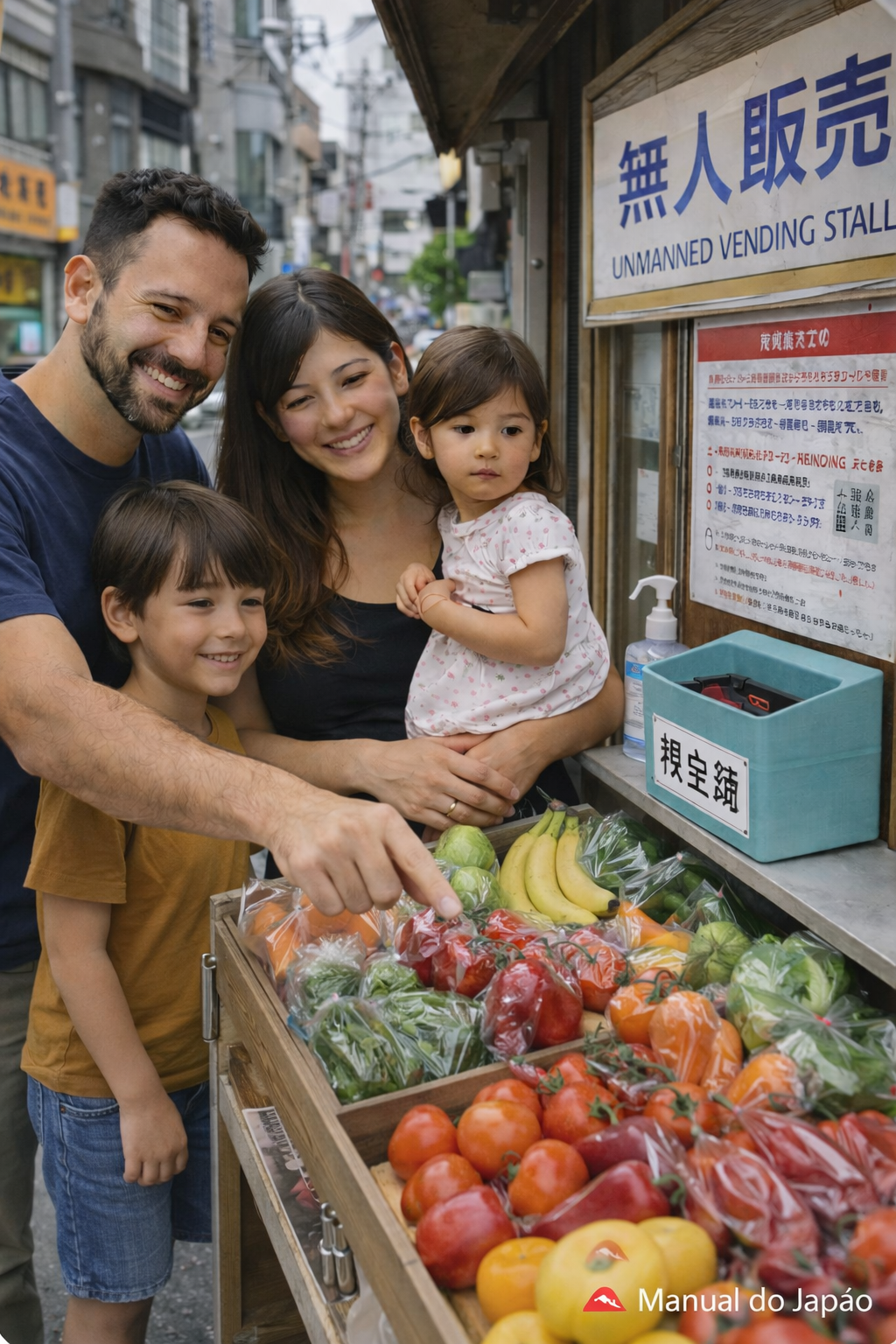
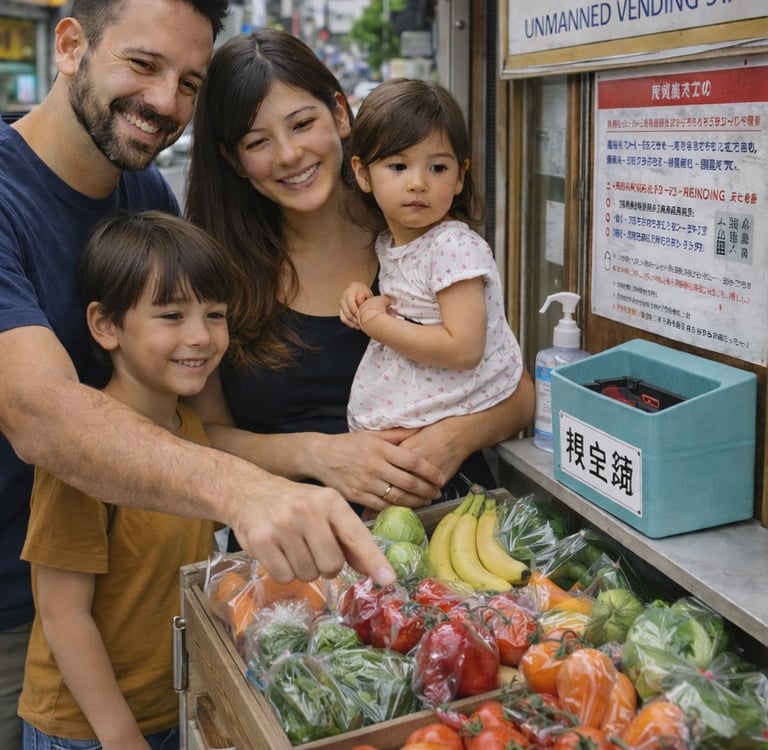
When people talk about "unattended sales" in Japan, many only think of the ubiquitous drink vending machines. But the Mujin Hanbai (無人販売) system is a much richer universe, a deep reflection of Japanese culture of trust, efficiency, and pragmatism. It's a concept that ranges from a simple basket of vegetables on the roadside to giant industrial warehouses.
This guide from Manual do Japão explores all facets of Mujin Hanbai, explaining how this unique system works, where to find it, and how you, as a Brazilian, can use it with confidence to save money and discover an authentic side of Japan.
What is Mujin Hanbai? The Philosophy of Trust
Mujin (無人) means "without people." Hanbai (販売) means "sale." It is a self-service system based on honor (信任 - shin'nin seido), where the customer takes the product, checks the price, and deposits the money in a safe (金庫 - kinko) or box, often taking their own change. There is no direct supervision.
The Fundamental Principle: Society functions when everyone follows the rules. Breaking this trust is a serious lack of respect (失礼 - shitsurei).
The 4 Types of Mujin Hanbai (From Simplest to Most Complex)
1. Small Mujin Hanbai-jo (農村無人販売所 - Nōson Mujin Hanbaijo)
Where: Roadsides in the countryside, entrances to rural properties.
What it sells: Fresh agricultural products. Tomatoes, cucumbers, oranges, flowers, sometimes eggs or homemade honey.
How it works: Products on trays or in baskets, with prices per unit or weight. A small safe or money box next to it.
Tip: The essence of rural Japan. Buy directly from the producer; the flavor and price are unbeatable.
2. Mujin Ten / Koban (無人店 / 古板) - Unattended Second-Hand Shop
Where: Converted sheds or houses in residential or rural areas.
What it sells: Everything used. Furniture, appliances, dishes, books, clothes, tools.
How it works: Looks like a messy "antique shop." Each item has a fixed price tag. Pay at the money box in the center.
Tip: Hidden treasures at symbolic prices. Patience is key.
3. The True Mujin Hanbaijo (Industrial Warehouse)
Where: Industrial zones (工業地帯 - kōgyō chitai), city outskirts.
What it sells: New products with "flaws" (訳あり - wakeari). Appliances (with dents), tools, furniture, bicycles, excess stock.
How it works: A semi-open warehouse full of pallets. Safe system. It's the large-scale "treasure hunt" version.
Tip: Bring cash, an extension cord to test items, and a large car. This is where you make the best deals.
4. Vending Machines (自動販売機 - Jidōhanbaiki)
The most urban and automated form of Mujin Hanbai. Sells everything from drinks to umbrellas, soups, and even trinkets.
Etiquette Guide: How to Behave at a Mujin Hanbai
Following the unwritten rules is essential to maintaining the system.
Have the Correct Change: Avoid ¥10,000 notes. Use ¥1,000 notes or coins.
Count Change Correctly: If the safe allows taking change, count carefully and take only what is due.
Touch Only What You Will Buy: Do not open sealed packaging without the intention to buy.
Respect Limits: If a sign says "maximum 3 per person," obey it.
When in Doubt, Don't Buy: With no seller to ask, it's better to leave it if you're unsure about the product or price.
Test (At Warehouses): The golden rule: test appliances on the spot with an extension cord. There are no returns.
Why Do Japanese People Trust This System?
Low Operational Cost: Without salesperson salaries, prices can drop drastically.
Fights Waste: Allows selling imperfect or perishable products that traditional commerce would refuse.
Convenience 24/7: Operates at any time, ideal for rural areas with little traffic.
Strengthens Community: In the countryside, it's a way for farmers to supplement their income and for residents to access fresh products.
Brazilian Visitor's Checklist
Open Mind: Accept the logic of trust.
Cash: Always.
Coin Purse: To facilitate payment.
Car: For industrial warehouses and to carry large purchases.
Testing Tool: Power extension cord and batteries for warehouses.
Patience to Search: The best places are discovered through word of mouth.
Conclusion: More Than Shopping, a Cultural Experience
Using the Mujin Hanbai system is participating in a unique social pact. For us Brazilians, it may be strange at first, but it is one of the most authentic ways to interact with Japanese society at its core.
You are not just buying cheap vegetables or a refrigerator. You are validating a system built on honor, responsibility, and mutual efficiency. It's a practical lesson in how Japan works.
The next time you see a little sign saying 「無人販売」, stop. Explore. Participate. And feel the unique satisfaction of making a good deal sustained by trust.
Also, check out our video about it on TikTok, Instagram, and YouTube.
Remember: All useful apps for navigating Japan, like translators and maps, are on our Apps Guide page.
#MujinHanbai #MujinHanbaijo #VendaSemVendedor #SistemaDeConfiança #JapaoAutentico #CulturaJaponesa #ComprasNoJapao #EconomizarNoJapao #BrasileirosNoJapao #ManualDoJapao #Wakeari #AutoatendimentoJapao