How to Bring Your Pet from Brazil to Japan
A Straightforward Guide
LIFE IN JAPAN
1/29/20264 min read
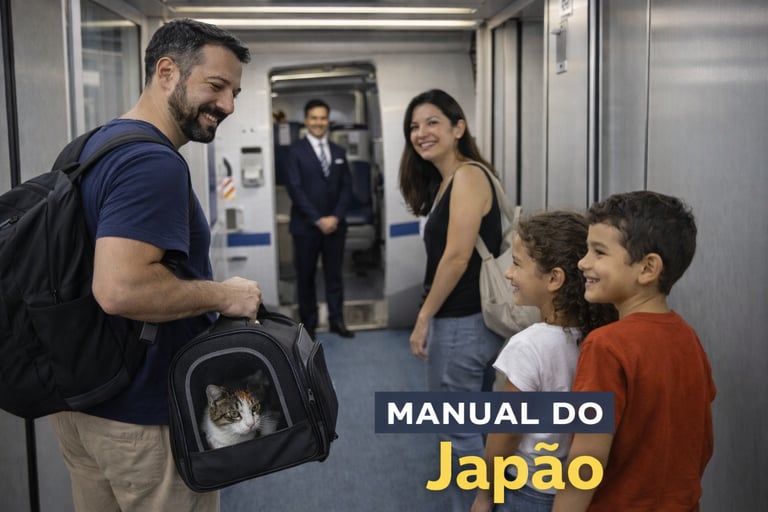
Bringing your pet from Brazil to Japan is a bureaucratic, expensive, and delicate process, but entirely possible with meticulous planning. A mistake at any stage can result in quarantine, the animal's return, or, in the worst case, its euthanasia. Therefore, following the protocol to the letter is not an option—it's an obligation.
This definitive guide from Manual do Japão details all the procedures, deadlines, costs, and pitfalls of the process, based on the official rules from Japan's Ministry of Agriculture, Forestry and Fisheries (MAFF) and real accounts from Brazilians who have made the journey.
Japan's Basic Requirements: The Timeframe is EVERYTHING
Japan is a rabies-free country. All rules revolve around proving that your animal is NOT a risk for introducing the disease. The process takes at least 7 months. There are no shortcuts.
Classified Country: Brazil is considered by Japan as a "Designated Region (Rabies Non-free Area)" (指定地域 - Shitei Chiiki). This dictates the most stringent protocol.
Permitted Species: Only dogs and cats. Rodents, birds, and reptiles have different rules (almost always entry prohibition).
Step-by-Step Guide (Minimum 210-Day Schedule)
PHASE 1 - PREPARATION IN BRAZIL (Day 0 to ~Day 180)
ISO 11784/11785 Microchip (Day 0): The FIRST step. The microchip must be implanted BEFORE any vaccine or test. It is the official identification number for the entire process.
Rabies Vaccination (Day 1+): After microchipping, administer the first inactivated rabies vaccine. Record the batch, manufacturer, and date on the certificate.
Neutralizing Antibody Titer (Serology Test - Day 30+):
Collect blood at least 30 days after the vaccination.
The serum must be sent to a laboratory accredited by the Japanese government. The only one in Brazil is Lanagro/MG (National Agricultural Laboratory of Minas Gerais).
The result MUST be equal to or greater than 0.5 IU/ml. This is the most critical step. If the titer is low, you must vaccinate and test again, delaying everything by months.
KEEP the original result with Lanagro's stamp and signature.
Mandatory Waiting Period (180 Days): After the blood draw that produced the acceptable result, you MUST wait 180 days before arrival in Japan. This is the longest single period in the process. The arrival date is calculated from the DAY OF THE BLOOD DRAW.
Second Rabies Vaccination (Within Validity): Administer the second dose within the vaccine's validity period (usually 1 year), before travel.
Treatment for Ticks and Internal Parasites (Within 10 days before departure): Must be administered and certified by a veterinarian accredited by MAPA (Brazil's Ministry of Agriculture).
PHASE 2 - FINAL DOCUMENTATION AND FLIGHT (Days 181 to 210)
International Health Certificate (CERF - International Veterinary Certificate):
Issued by a veterinarian accredited by MAPA.
Must be done WITHIN 10 DAYS before departure.
This is the document that will be inspected at the arrival airport in Japan.
Advance Notification to Japan's Animal Quarantine Service (AQS):
At least 40 days before arrival, you must send the "Advance Notification" form and all scanned documents (microchip, vaccines, serology, health certificate) to the AQS office at your arrival airport (Narita, Haneda, etc.).
They need to approve your documentation. Without this email approval, your animal will be denied entry.
PHASE 3 - ARRIVAL AND QUARANTINE
At the Japanese Airport:
If ALL deadlines and documents are perfect, your pet will undergo a physical and documentary inspection and may go home.
If there is any irregularity (missing document, wrong date), the animal will be sent to the airport quarantine facility for an indeterminate period (costing hundreds of dollars per day) until the problem is resolved.
Best Airlines for Pets in the Hold (Checked Baggage)
Not all airlines accept pets, and rules change. CONFIRM EVERYTHING directly with the airline.
Lufthansa / Air France-KLM: Traditionally the most "pet-friendly," with well-established procedures for long-haul flights. They offer connections via Europe.
Qatar Airways / Emirates: Good options for routes via the Middle East. They have specific facilities for animals in transit (Pet Relief Areas).
Latam: Operates direct Brazil-Japan flights (via Chile/Peru) and allows pet transport, but availability is very limited. Book WELL in advance.
IMPORTANT: Flights with connections in the USA, UK, Australia, or Hong Kong are extremely complex or prohibited for animals coming from Brazil due to their own strict sanitary rules. Avoid them.
Main Problems and Fatal Mistakes (to AVOID at All Costs)
Incorrect Calculation of the 180 Days: The most common mistake. The count starts on the day of the blood draw for the serology test, NOT the day of the vaccine. Getting this wrong = quarantine.
Vaccinating Before Microchipping: If the vaccine was administered before microchipping, it is NOT VALID for the process. You must restart the cycle with the microchip first.
Low Serology Test Titer: If the result is below 0.5 IU/ml, the entire process is invalidated. Consult a veterinarian specialized in international animal health to maximize your chances of success.
Documentation Under Different Names: All documents (microchip, certificates, airline ticket) MUST be in the name of the same owner who will travel. Discrepancies cause problems.
Not Notifying Japanese Quarantine (AQS) in Advance: Arriving without prior approval is a guarantee of headaches and very high costs.
Choosing an Inadequate Transport Crate: Must be IATA-approved, rigid, ventilated, and large enough for the animal to stand, turn around, and lie down. Arrange it weeks in advance for the animal to get accustomed.
Overlooking Stress and Temperature: Choose flights during mild weather seasons (spring/autumn). Avoid very long layovers or periods of extreme heat/cold. Some airlines have temperature restrictions for pet embarkation.
Estimated Costs (Prepare Your Wallet)
Microchip + Vaccines: R$ 300 - R$ 500
Serology Test (Lanagro): ~R$ 600 - R$ 800
International Certificate (MAPA): ~R$ 300 - R$ 500
Air Transport: VARIES GREATLY. From R$ 3,000 to R$ 10,000+, depending on the route, airline, animal size, and weight.
Inspection Fee in Japan: About ¥10,000 - ¥20,000.
Quarantine Cost in Japan: Can easily exceed ¥50,000 (approx. R$ 1,600) per day.
Survival Checklist Summary
ISO Microchip implanted FIRST.
Rabies vaccine post-microchip.
Serology Test at Lanagro/MG (result ≥ 0.5 IU/ml).
Wait 180 days from the blood draw.
Vaccines up to date and ectoparasite treatment.
International Health Certificate (MAPA) issued ≤ 10 days before the flight.
Notify Japan's AQS ≥ 40 days before arrival and obtain approval.
Book the pet's flight with an airline that accepts them.
Suitable, IATA-approved transport crate, acclimatized.
Check airline-specific requirements (specific documents, crate types).
Bringing your pet is a marathon, not a sprint. Start the process at least 8-9 months in advance. Hiring a specialized pet relocation agent can be worth the investment for peace of mind, but it does not exempt you from knowing and checking each step. The reunion in Japan, after all this care, is priceless.
#BringPetToJapan #PetInJapan #TravelWithPet #BraziliansInJapan #ManualDoJapao #DogInJapan #CatInJapan #AnimalQuarantine #PetImport #PetStepByStep