Cost of Living in Japan in 2026
A Crucial Analysis to Plan Your Move
LIFE IN JAPAN
1/15/20263 min read

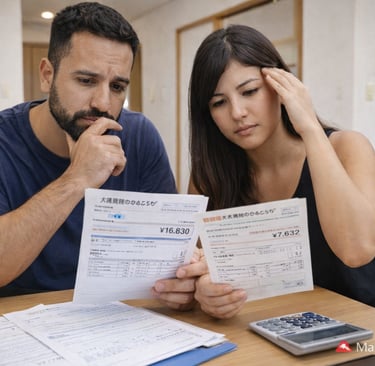
The question that defines the future of many Brazilians: "How much money do you need to live in Japan in 2026?" The post-pandemic, global inflation scenario demands a much more complex answer than a simple number. The era of "coming to get rich quick" is over. Now, the discussion is about financial survival, discipline, and realistic planning.
This Manual do Japão guide doesn't just show numbers. It compares two antagonistic spending profiles and reveals the brutal mathematics behind the decision to immigrate. The choice between the unsustainable and the sustainable path will define your success or failure next year.
The Mathematics of Reality: Two Japans, Two Destinies
Let's compare two real scenarios. The reference net salary for a factory or essential services worker is between ¥180,000 and ¥220,000. From there, your lifestyle choice defines everything.
The Unsustainable Profile (The Path to Debt and Forced Return)
This profile prioritizes immediate comfort and status, repeating common mistakes.
Housing: Rents a new, small mansion in the city center, alone. Cost: ¥90,000 - ¥130,000
Food: Eats out or orders delivery daily; frequently buys imported Brazilian goods. Cost: ¥60,000 - ¥90,000
Transportation: Buys a popular car (not a kei) on installments, with expensive insurance, for short trips. Cost: ¥30,000 - ¥50,000 (installment + gas + insurance + taxes)
Phone/Internet: Postpaid cell phone plan from major carriers (Docomo, SoftBank) and premium fiber internet. Cost: ¥15,000 - ¥20,000
Leisure & Consumption: Brand-name clothes, new electronics, bars on weekends. Cost: ¥50,000+
💰 Total Estimated Cost: ¥245,000 - ¥340,000/month
Result: AUTOMATIC DEFICIT. Even with a salary at the high end (¥220,000), the math doesn't add up. The person lives on the edge, relying on overtime to cover basic bills, without saving a cent. Any unforeseen event (health problem, cut in hours) or visa non-renewal becomes a financial catastrophe, forcing a return to Brazil with debts.
The Sustainable Profile (The Formula for Stability and Permanence)
This profile prioritizes long-term financial security, adopting simplicity as a strategy.
Housing: Shares a house (share house) or rents a modest apāto (1K) in residential neighborhoods, a 10-15min bike ride from the station. Cost: ¥40,000 - ¥65,000 (individual)
Food: Cooks at home, makes bentō for work, shops at Gyomu Super, and uses nightly discounts (negi). Cost: ¥25,000 - ¥40,000
Transportation: Bicycle as main transport; uses train pass only if necessary. If a car is needed, opts for a used keijidōsha (軽自動車), paid in cash. Cost: ¥5,000 - ¥12,000
Phone/Internet: Low-cost cell plan (MVNO like IIJmio or LINEMO) and basic internet. Cost: ¥3,000 - ¥6,000
Leisure & Consumption: 100-yen shops, public parks, home hobbies, low-cost travel within Japan. Cost: ¥15,000 - ¥25,000
💰 Total Estimated Cost: ¥88,000 - ¥148,000/month
Result: SURPLUS AND SAVINGS POTENTIAL. With a salary of ¥180,000, there is between ¥32,000 and ¥92,000 left per month. This money is the key to: 1) Building an emergency fund; 2) Sending remittances strategically to Brazil; 3) Investing in qualifications (Japanese language, technical courses); 4) Building a solid financial history for visa renewal.
The Hidden Trap of 2026: Initial Costs and the New Reality
Move-in Costs (Shikikin/Reikin): Can consume ¥300,000 to ¥500,000 at once. Coming without a reserve for this is a serious mistake.
First-Year Health Insurance: Without an income history, the municipal rate is maximum (can exceed ¥20,000/month). This initial cost is underestimated by many.
Selective Inflation: Energy (electricity/gas) and basic foods (oil, wheat, meat) remain volatile. Your budget needs a margin for this.
Conclusion: Is it Worth Considering the Cost of Living in 2026?
The right question is not "how much does it cost?" but "what life do you want to buy?".
If you are looking for a consumption experience (living like a permanent tourist), Japan in 2025 will be prohibitively expensive and unsustainable for most immigrant salaries.
If you are looking for a building experience (stability, learning, long-term assets), Japan in 2025 is still viable and rewarding.
The Golden Rule for 2026: The country rewards discipline and punishes waste. Your ability to live below your means, adopt a shōyu-katsu lifestyle (simple and functional), and focus on savings will be the greatest indicator of your success.
Come with your feet on the ground, a robust reserve, and the mindset of the Sustainable Profile. Japan is still an opportunity, but only for those who see it as a financial marathon, not a 100-meter dash.
#CostOfLivingJapan2026 #WorthItJapan2026 #SustainableProfile #BraziliansInJapan #JapanEconomy #FinancialDiscipline #LifeInJapan #ManualDoJapao #JapanReality #FinancialPlanning