Exploring the Curiosities of Traffic in Japan
From the Strictest Rules to Consequences You Would Never Imagine
LIFE IN JAPAN
1/24/20264 min read
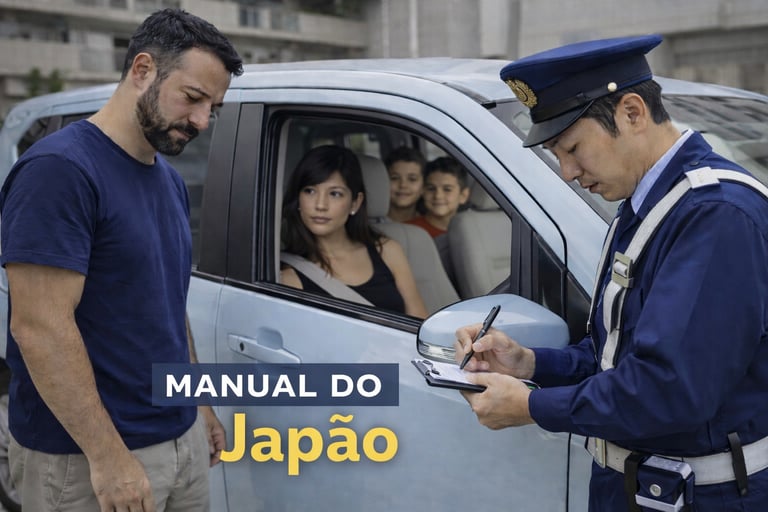
Driving in Japan means entering a universe of extreme organization, where cultural curiosities mix with implacable laws. What is common sense for a Japanese person can be an expensive trap for a Brazilian – and what seems like a minor slip in Brazil can cost you your right to stay in the country here.
This Manual do Japão guide reveals the curiosities, surprising rules, and devastating consequences of Japanese traffic that every foreigner needs to know before getting behind the wheel.
7 Cultural Curiosities That Are Law in Japan
The Horn You DON'T Use (クラクションの文化)
Curiosity: In 10 years in Japan, you might hear fewer horns than in one day in Brazil.
The Law: Honking is only allowed to prevent an imminent accident. Using it as a "hello" or out of impatience is a traffic violation (¥7,000). The horn is considered a cry of desperation, not communication.
The "Tomare" That REALLY Stops (止まれの厳格さ)
Curiosity: At intersections with the 止まれ sign, cars stop completely, rock forward, and only then proceed.
The Law: Requires a complete stop with ZERO speed. The Brazilian "rolling stop" is a serious violation (2 points, ¥7,000).
Cyclists on the Sidewalk (自転車と歩道)
Curiosity: It's common to see entire families on bicycles on the sidewalk, even at night with flashing lights.
The Law: On many streets, riding a bicycle on the sidewalk is permitted. Drivers must give absolute priority when exiting driveways or turning.
Headlights on Rainy Days (雨天のライト)
Curiosity: On days with light rain, many drivers already turn on their low beams.
The Law: It is mandatory to turn on headlights at night, in tunnels, and when visibility is reduced. The preventive culture is taken seriously.
The Phone You DON'T Touch (スマホの絶対禁止)
Curiosity: You will see drivers stopped at traffic lights with both hands on the wheel, even with no traffic.
The Law: Handling a mobile phone is prohibited with the vehicle operating on the road – including while stopped at a light. Fine: ¥18,000 and 3 points.
Seat Belts in the BACK (後部座席のシートベルト)
Curiosity: Even grandparents in the back seat automatically put on their seat belts.
The Law: Mandatory for ALL occupants. Fine of ¥7,000 per unbelted passenger + points for the driver.
The Courtesy That is Mandatory (譲り合いの精神)
Curiosity: At unsignaled intersections, drivers often signal with their hand for the other to go first.
The Law: The vehicle coming from the RIGHT has the right of way. The "courtesy" actually follows a clear rule that prevents accidents.
The Fault System That DIVIDES EVERYTHING (過失割合)
Unlike Brazil where there's usually one "guilty" party, in Japan fault is almost always percentage-based:
Rear-End Collision: The one who hits from behind usually gets 100% of the fault.
Unsignaled Intersection: The one coming from the left against the one coming from the right: 70% to 100% fault.
Exiting a Parking Lot/Minor Road: The one exiting has 70% to 100% of the fault.
Crucial Fact: Even with 1% fault, you are registered as involved in an accident, which impacts your insurance history and visa status.
The Biggest Surprise: Hitting a Crop Field = Bankruptcy?
YES, it's true and frightening:
If you damage a crop field (rice, vegetables, fruits), you won't pay just for the destroyed plants.
The calculation includes:
Destroyed plants
Labor for repairs
LOSS OF THE ENTIRE HARVEST from that area
Compensation for emotional distress
Real Example: A car that skids and damages 15 meters of a melon field (each melon is worth ¥3,000-¥5,000) could receive a bill for ¥2,000,000 to ¥5,000,000.
MANDATORY Procedure: STOP, call the police (110), and locate the owner. Fleeing is the crime of hit-and-run (ひき逃げ) with a penalty of up to 10 years.
The Consequences That Threaten YOUR VISA
Japanese immigration sees traffic violations as indicators of your character as a resident.
Minor Fines (parking): Already cause an observation on your visa renewal.
Serious Violations (phone, not stopping at Tomare): Can be considered "violation of laws" – a reason to deny renewal.
Involvement in ANY Accident: WILL be questioned. You will need the 事故証明書 (Accident Certificate) and explanations.
Drunk Driving or Accident with Victims: Almost always results in NO RENEWAL and DEPORTATION proceedings.
Chain Responsibility: Those Who Enable It Also Go to Jail
Japanese law is relentless with those who enable dangerous driving:
Those Who Sell/Offer Alcohol knowing the person will drive:
Penalty: Up to 3 years in prison and a fine.
Those Who Lend Their Car knowing the driver is drunk:
Penalty: Up to 3 years in prison and a fine.
Plus: Are civilly liable for ALL damages caused.
The Passenger who knows the driver has been drinking and doesn't stop them:
Can be held responsible for complicity.
Consequences of Accidents with Victims: The Real Nightmare
Hit-and-Run WITH INJURIES: Crime of Injury through Negligence (過失傷害罪) – imprisonment or heavy fine.
Hit-and-Run or Collision WITH DEATH:
Even with little fault: Death through Negligent Driving (過失運転致死罪) – up to 7 years in prison.
If drunk: Death through Dangerous Driving (危険運転致死罪) – 1 to 20 years in prison.
Inevitable Result: Deportation and permanent ban from Japan.
Drunk Driving (飲酒運転):
Tolerance is ZERO (0.00%).
If caught: Fine up to ¥1,000,000, imprisonment up to 5 years, license revoked.
If causing an accident: Maximized penalties + civil lawsuits that can lead to bankruptcy.
How to SURVIVE Japanese Traffic: The Smart Foreigner's Checklist
Forget the Brazilian horn – only in EXTREME risk of accident
STOP COMPLETELY at 止まれ signs
Phone IN YOUR POCKET with the car running on the road
Seat belt on EVERYONE, ALWAYS
Alcohol and driving NEVER mix
Purchase voluntary insurance WITH MAXIMUM COVERAGE (無制限)
In ANY accident: STOP → 110 → Insurance Company
Never offer alcohol/lend your car to someone who will drive
Drive as if your visa depended on it (because it does)
Traffic in Japan is a mirror of society: organized, preventive, and implacable with those who break the rules. Knowing these curiosities isn't just cultural – it's a matter of financial and migratory survival. Every choice behind the wheel here carries a weight you won't find in Brazil. Drive with a mind as clear as Japanese traffic demands.
#TransitoJapao #CuriosidadesJapao #LeisTransito #DirigirNoJapao #MultasJapao #AcidenteTransito #VistoJapao #Deportacao #BrasileirosNoJapao #ManualDoJapao #SeguroAuto #ResponsabilidadeJapao